You are living longer, safer, and healthier than any human being who came before you. This article explains why – and what it means for your health today.
In brief: You are living longer, safer, and healthier than any human being who came before you. This article explains why – and what it means for your health today.
You wanted to be a pilot. Or perhaps a king. Either way, you ended up here – living longer than any Roman emperor, any medieval peasant, any Victorian factory worker ever dreamed possible. And yet, somehow, we have convinced ourselves that things have never been worse.
This article will show you exactly why that feeling – however real it seems – is wrong. Read it once. Then share it.
📋 Why This Matters – And Why I Am Telling You
I have spent decades at the sharp end of medicine: in operating theatres, in oncology wards, watching patients fight for their lives. I have also spent those same decades watching people arrive terrified – convinced that disease is winning, that the world is falling apart, that their bodies are losing a battle that cannot be won.
The evidence I have accumulated over that time tells a completely different story.
You deserve to hear it.
📋 What This Article Will Give You
Right now, you may be carrying a quiet anxiety – that illness is everywhere, that the world is more dangerous than it used to be, that your grandparents somehow had it better.
By the end of this article, you will understand clearly why that feeling has a name, why the data flatly contradicts it, and – most importantly – what that means for your own health today.
We will move through five battles humanity has fought and won: against early death, against war, against infection, against filth, and against hunger. And then we will talk about the one battle still in progress – and what your role in it actually is.
🌀 The Five Battles Humanity Has Won
📋 Battle One – The Fight Against Early Death
🔷 The World We Romanticise Was Trying to Kill Us
Let me begin with a number that should stop you cold.
The average life expectancy in the Roman Empire was 24 years.
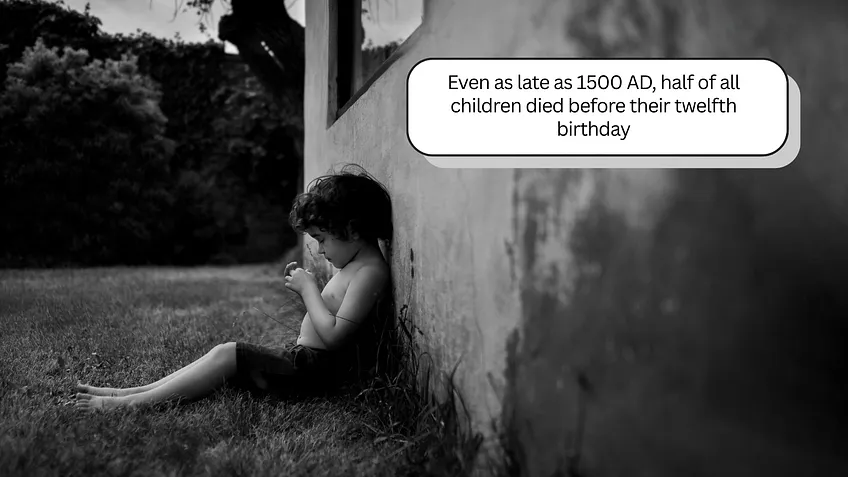
Not because everyone died young – but because so many children never survived long enough to grow up. Even as late as 1500 AD, half of all children died before their twelfth birthday. Half. If you managed to survive your first fifteen years, you might reach forty or fifty. Might.
And at the very top of Roman society? The emperors – the most powerful men in the known world – had an average reign of roughly ten years before meeting a violent end. Three out of every four died that way. Nero, famously, could not even wait for his assassin. He took matters into his own hands.
The next time someone tells you things were simpler back then – remind them of the lead water pipes. Remind them of the infant mortality. Remind them of Nero.
🔷 How We Won
Today, global life expectancy stands at 73.49 years. Between 2000 and 2019 alone – just nineteen years – it rose by six full years.
We have clean water. We have vaccines and antibiotics. Infant mortality has fallen so dramatically that the scale of the change is almost difficult to comprehend.
In this first, most fundamental battle – the fight against early death – humanity has won.
📋 Battle Two – The Fight Against War
🔷 We Are, After All, Descended From Primates
The first recorded war in human history occurred around 2700 BC – between Sumer and Elam, in what is now Iran and Iraq. And things barely improved for several thousand years thereafter.
Consider this. Lock fifty gorillas in a stadium at seven in the evening and return the following morning. You will not find music. You will find carnage. We carry those same instincts. And when they scaled up – from a scuffle to a campaign to an empire – the numbers become almost incomprehensible.
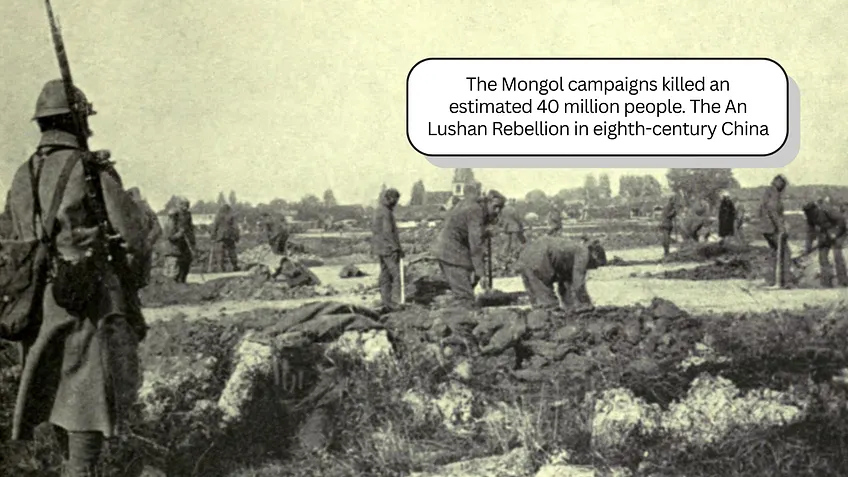
The Mongol campaigns killed an estimated 40 million people. The An Lushan Rebellion in eighth-century China – which began because one general decided one morning to declare his own dynasty – killed over 35 million. The Second World War, 85 million.
🔷 How We Won
And yet. Today, in an operating theatre, I will fight for seven or eight hours to save a single person from cancer. The contrast with history’s casual mass slaughter is staggering – and meaningful.
Wars have not ended. But they are fewer, and smaller, than they were. Slowly, painfully, through enough suffering and enough fear, human beings are learning – however reluctantly – to tolerate one another.
We are, bit by bit, winning this battle too.
📋 Battle Three – The Fight Against Infection
🔷 Infection Was a Death Sentence – Full Stop
Smallpox. Even saying the word carries weight.
In the twentieth century alone, somewhere between 300 and 500 million people died from it. Queen Elizabeth I survived it at twenty-nine – but she was the exception, not the rule. For most people, a smallpox diagnosis was simply the end of the story.
My grandmother used to say that if someone survived typhoid, you simply assumed they would lose something – their sight, their hearing, some organ or other. That was just accepted. That was normal.
And bacterial infections? Before antibiotics, a wound could kill you. A dental abscess could kill you. Childbirth could kill you. The randomness of it – the sheer indifference of infection – was terrifying.
🔷 How We Won
Then Edward Jenner looked at a milkmaid’s hands in 1796 and gave us the first vaccine. Then Alexander Fleming left a petri dish unattended in a corner of his London laboratory in 1928 and came back to find penicillin growing in it. Less than a century later, it is almost impossible to imagine surgery, childbirth, or even a minor skin infection without it.
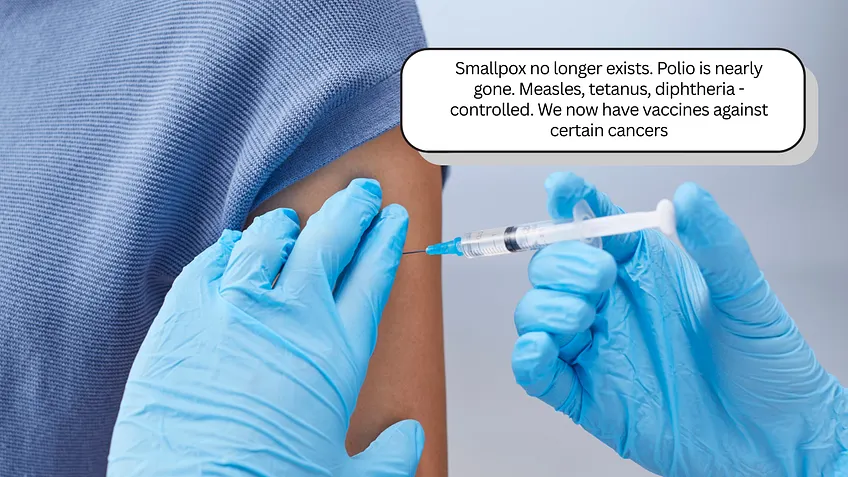
Smallpox no longer exists. Polio is nearly gone. Measles, tetanus, diphtheria – controlled. We now have vaccines against certain cancers. Cervical cancer is being eliminated in high-income countries through the HPV vaccine. India and parts of Africa are catching up, and they will get there.
Every time humanity looked up and said “there is no way through this” – some scientist in some laboratory quietly found the way.
We have overwhelmingly won the battle against infection.
📋 Battle Four – The Fight Against Filth
🔷 People Were Dying of Filth – and Blaming God for It
In Victorian London, a labourer’s average life expectancy was 22 years. In Manchester, sixty out of every hundred children born to working-class families died before the age of five.
People were terrified of cities. And they were right to be.
The prevailing explanation for all this death was sin – divine punishment, moral failing. The idea that overcrowded, disease-ridden slums were a public health problem solvable by engineering had not yet arrived.
🔷 How We Won
Then, in 1847, Dr William Henry Duncan oversaw the laying of 140 miles of drainage in Liverpool. Deaths fell. People realised, with something approaching shock, that they had not been dying of sin. They had been dying of sewage.
The lesson was simple and transformative: remove the source of contamination, and the epidemic stops.
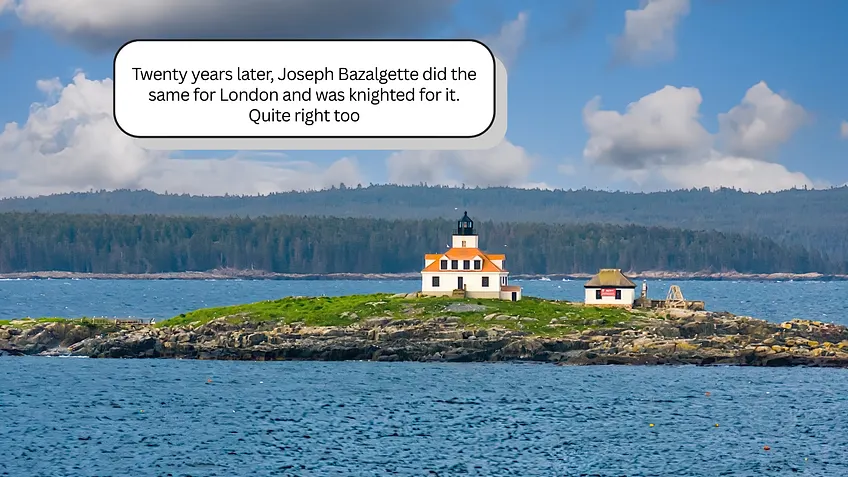
Twenty years later, Joseph Bazalgette did the same for London and was knighted for it. Quite right too. Great drains have saved more lives than many a great general.
John Snow traced cholera to a single water pump in Soho, London – before antibiotics even existed – simply by mapping where the deaths were clustering. Once the contaminated source was removed, the epidemic stopped. Dysentery, once a serious killer across Bengal, is today little more than a punchline in Bengali households.
We beat these diseases not with miracles, but with maps, sewers, and clear thinking.
📋 Battle Five – The Fight Against Hunger
🔷 People Died of Hunger – and We Still Carry That Fear
The Great Chinese Famine of 1959 killed an estimated 55 million people. Agricultural work had been halted in favour of steel production. People starved while factories ran.
The Bengal Famine of 1943 killed 3 million – within living memory for many families here. The memory of that hunger runs so deep it reshaped the language of love. Even today, the most affectionate thing a Bengali can say to someone they care about is: “আরেকটু ভাত দিই?” – “Shall I give you a little more rice?”
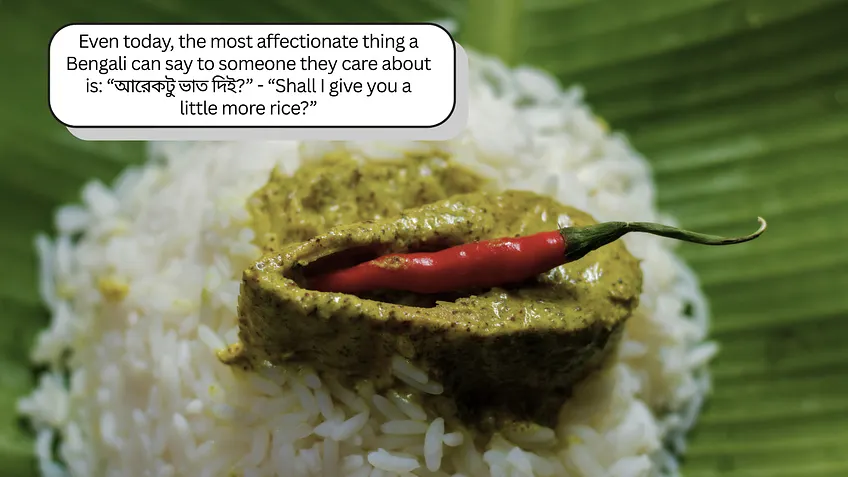
That is not merely a food habit. That is generational trauma, encoded into hospitality.
🔷 How We Won
England’s Norfolk four-course crop rotation showed how to multiply yields from a single field across seasons. Norman Borlaug’s high-yield wheat varieties and irrigation methods launched the Green Revolution – and it swept from Mexico to India. In India alone, wheat production rose from 10 million tonnes in 1960 to 73 million tonnes by 2006. A seven-fold increase.
The new problem – and I say this without irony – is that we are now eating too much.
We have very nearly beaten famine.
🌀 So Why Do We Still Feel Like Everything Is Getting Worse?
Despite all five of these victories – against early death, against war, against infection, against filth, against hunger – we still look around and feel that things are deteriorating.
Why?
Because the human brain has a flaw. A well-documented, well-named flaw.
It is called declinism – the deep cognitive tendency to believe that things are always getting worse. It gained cultural weight with Oswald Spengler’s The Decline of the West, written in the shadow of the First World War. Psychiatry has a more precise term for the companion phenomenon: rosy retrospection – the tendency to look back and see a garden of roses with no thorns whatsoever.
People sigh about the British Raj as a golden age. They pine for their school days – conveniently forgetting the salt taxes and the kerosene lamp fumes. Science calls this nostalgia. The data calls it wrong.
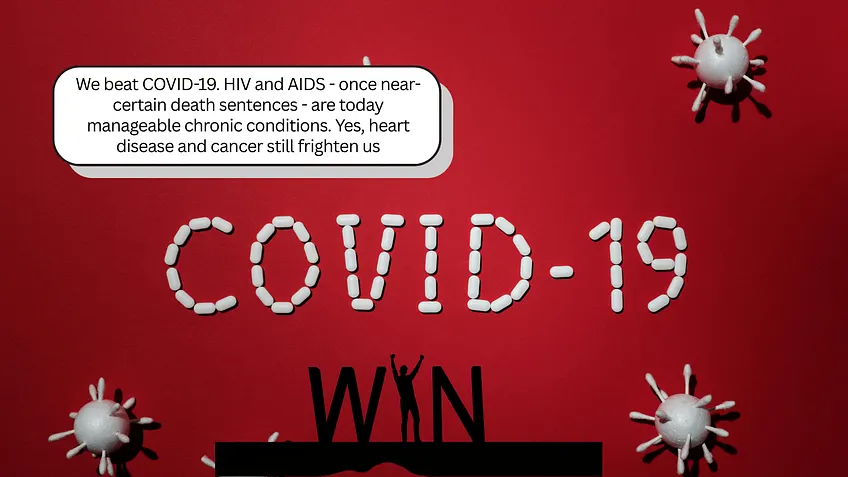
We beat COVID-19. HIV and AIDS – once near-certain death sentences – are today manageable chronic conditions. Yes, heart disease and cancer still frighten us. They should. But early research findings are genuinely encouraging.
I believe – with real conviction, built on evidence rather than optimism – that we will beat cancer the same way we beat smallpox: through relentless research and clinical commitment.
That is the screenshot-worthy line in this piece. It is also the one I mean most sincerely.
Prayers alone – however sincere – will not get us there.
🌀 What Will Actually Get Us There
📋 Research Must Mean Something
Governments must push the culture of scientific inquiry beyond elite institutions. Research must not be reduced to a game of journal publications, impact factors, and professorial politics.
It must mean something real, for real people, in real time.
📋 You Are Not a Passenger
The equally important front is a shift in how we live every day.

In your journey of health, you are not a passenger.
You are the pilot.
Our forthcoming book covers exactly what to watch out for before things go wrong – the signals your body sends, and what to do when they arrive.
Dr Manas Chakrabarti, FRCOG, is a Senior Gynaecological Oncologist based in Kolkata. He is an Ex-Cochrane author and one of India’s well trusted surgeons for complex gynaecological and gynaecological-oncological procedures. His patients travel from across India, the Middle East, and Europe for his care.
Further Reading & Resources
Six HPV Vaccine Myths Busted: What Every Woman Must Know
Cervical Cancer Vaccine in India | Updated 2026 Price | Dr Manas Chakrabarti
Living Well After Cervical Cancer: 10 Essential Steps | Dr Manas Chakrabarti
This is an impartial , unsponsored health information. For public awareness and not a replacement of Medical Advice.

